

Family Office
(Mega-)IPOs: Generators of returns or drivers of risk?
Initial public offerings play a vital role in the capital market: they democratize wealth creation, boost market liquidity, and enhance transparency within the financial system. Mega-IPOs—such as those of SpaceX, Anthropic, and OpenAI—and the inclusion of these technology heavyweights in broad market indices have the potential to fundamentally transform the global financial landscape.
Aug 5, 2026

The number and proceeds of initial public offerings (IPOs) fluctuate significantly from year to year, as they depend on current market conditions and the interest rate environment. In 2025, 1,169 IPOs worldwide raised USD 171.5 billion. The highest number of IPOs took place in India, while companies listed in China generated the highest proceeds. Although IPOs involving private equity-backed companies account for only 8% of all deals globally (16% in the US, 13% in Europe), they represent 36% of global proceeds, 65% of US proceeds, and nearly 60% of European proceeds.
If Anthropic and OpenAI were to go public at the rumored valuations of just under $1 trillion each, their combined valuation—along with that of the already listed SpaceX—would amount to nearly one-third of the inflation-adjusted market value of all US IPOs from 1980 to 2025. The resulting increased reliance on and concentration within the tech sector around AI and AI infrastructure companies would further exacerbate the already significant concentration risk. The high volume of IPOs could trigger portfolio reallocations and liquidity constraints.
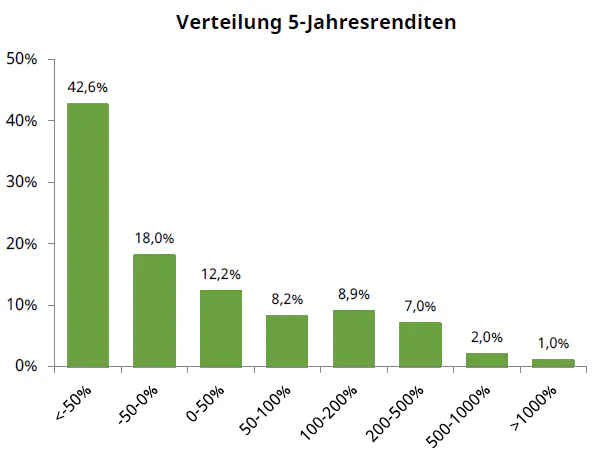
Amidst all the massive hype, two aspects are of particular importance: First, the medium-term return performance of US IPO stocks generally lags behind that of the broader market. While newly issued shares do rise significantly on average during their first day of trading—a phenomenon deliberately accepted and known as "underpricing"—more than half of all US IPOs yield a negative return over a five-year horizon, even without adjusting for market performance.
Furthermore, index providers such as MSCI, FTSE, and Nasdaq weight companies based on free-float-adjusted market capitalization rather than total market capitalization. This free-float weighting ensures—particularly in the case of mega-IPOs—that indices do not reflect a company’s astronomical total valuation, but rather only the portion actually available for free trading on the stock exchange. For a corporate giant with a total market capitalization exceeding one trillion US dollars and a free float of 5%, for instance, the actual index weighting would often be a mere fraction—such as 0.21%—even though the company ranks among the most valuable in the world.
At Reimann Investors, we pursue a data-driven investment philosophy; consequently, as a general rule, we do not invest directly in initial public offerings (IPOs) or in recently listed companies. Instead, our strategies rely on a robust track record grounded in comprehensive, long-standing market, fundamental, and analyst data.
Source: Reimann Investors, Ernst & Young – „EY Global IPO Trends 2025“, PricewaterhouseCoopers – „Global IPO Watch H1 2026“ und Ritter (2026) – „Initial Public Offerings: Updated Long-Run Statistics“.

© 2026 Reimann Investors